Jorim means braised in seasoned liquid, and fish jorim is a weeknight staple across Korea. Two regional versions dominate: Andong's salted mackerel and Jeju's hairtail. Choosing between them is not a matter of taste alone — they need different handling.
Two fish, two problems to solve
| Mackerel (godeungeo) | Hairtail (galchi) | |
|---|---|---|
| Region | Andong, salted | Jeju, fresh |
| Flesh | Oily, firm, strong | Lean, soft, mild |
| Bones | Central spine, manageable | Fine bones throughout |
| Main risk | Too salty, fishy | Falls apart in the pot |
| Sauce style | Soy-forward, radish | Chili-forward, potato |
| Cooking time | 20-25 min | 12-15 min |
Mackerel's problem is intensity. Hairtail's problem is fragility. Almost everything in the two recipes follows from that.
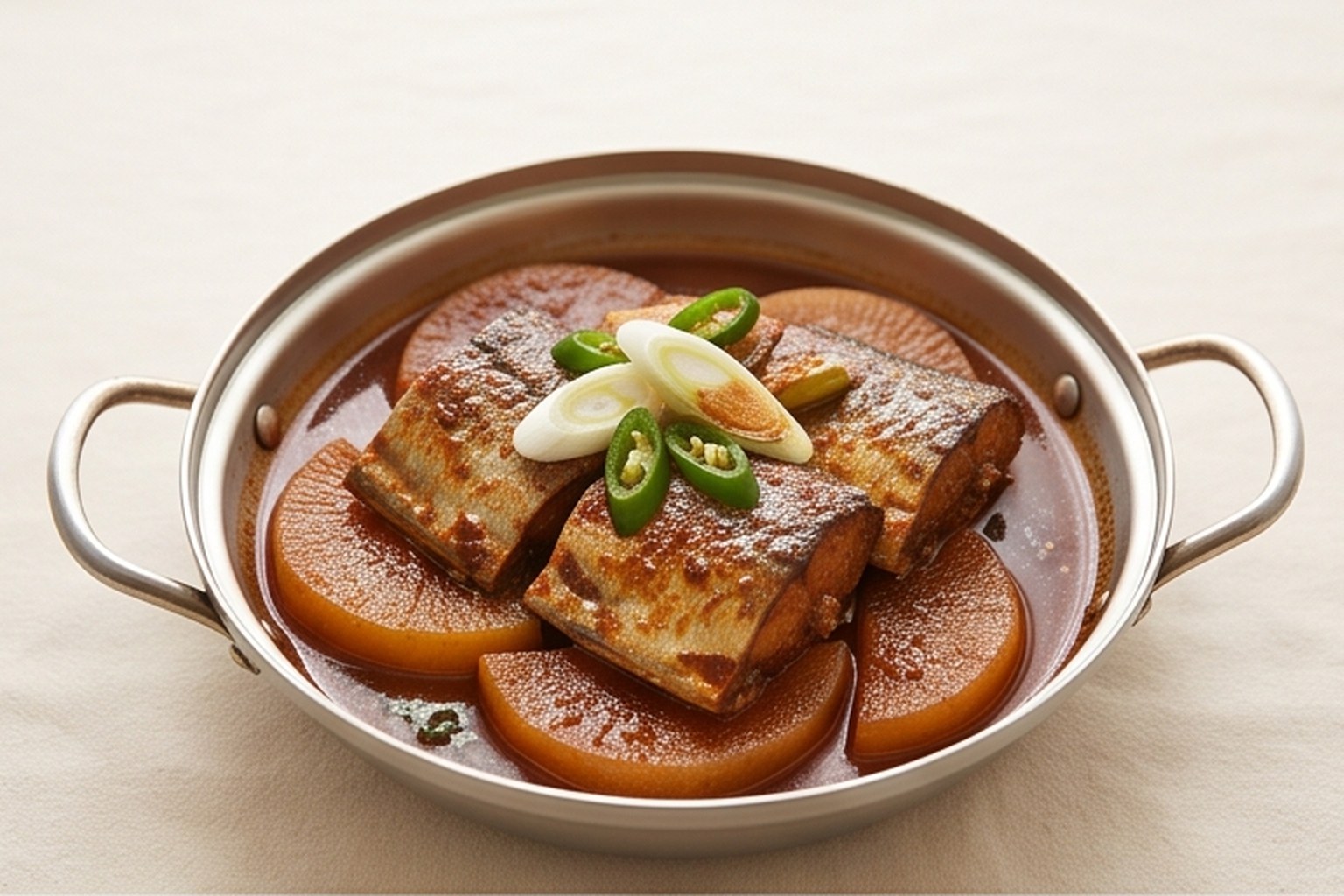
Mackerel: why it comes salted
Andong is inland. Before refrigeration, mackerel caught on the east coast had to travel over mountains to reach it, and the fish was heavily salted en route. Andong salted mackerel — ganggodeungeo — became a regional specialty rather than a compromise, because the salt firms the flesh and concentrates the flavor.
If you buy salted mackerel, soak it in cold water for twenty to thirty minutes before cooking, changing the water once. Skip this and the dish is inedible. If you buy fresh mackerel, salt it lightly and leave it thirty minutes, then pat dry — you are approximating what the salting did.
Radish belongs underneath. Lay thick slices on the bottom of the pot, fish on top, and the radish absorbs oil and fishiness while turning translucent and sweet. Many people prefer the radish to the fish.
Hairtail: delicate, and it will fall apart
Hairtail is a long silver ribbon of a fish, sold cut into segments. The flesh is fine and mild, closer to sole than to mackerel.
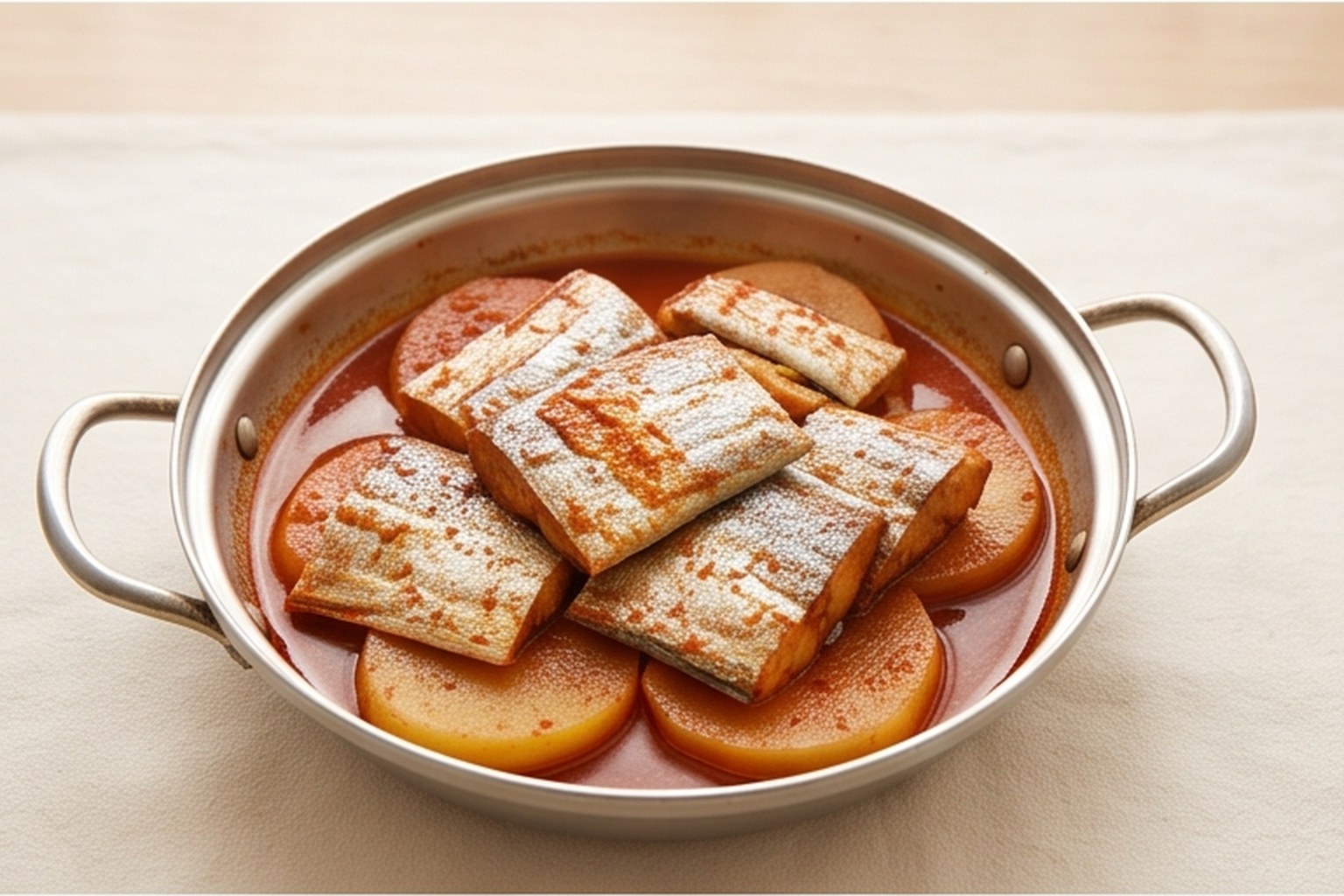
The rule is do not stir. Arrange the pieces in one layer, add sauce, and from that point spoon liquid over the top rather than moving anything. Hairtail that has been turned twice will arrive at the table as shreds.
Potato goes underneath here instead of radish, and it takes on the chili sauce beautifully. Cut it thick so it holds.
The silver coating on the skin is edible and normal. Some cooks scrape it off for appearance; there is no need.
Buying either one outside Korea
- Frozen is fine, sometimes better. Both fish are usually frozen at sea. A solidly frozen block beats a "fresh" fillet that has been thawed on ice for two days
- Mackerel — look for firm flesh and clear eyes if whole. Avoid pieces with yellowing along the cut edge, which means the oil has oxidized
- Hairtail — usually sold frozen in segments at Korean and Chinese groceries. Look for intact silver skin
- Skip salted mackerel if you cannot find it. Fresh mackerel salted at home for thirty minutes gets you most of the way
A sauce that works for both
Soy sauce, gochugaru, minced garlic, a little sugar, and water. For mackerel lean on the soy sauce; for hairtail lean on the gochugaru. Add a spoonful of the soaking water from dried anchovies if you have it, which deepens the base without adding more salt.
Green chili and scallion go in at the very end, off the heat, so they stay sharp against the braise.
Cooking Korean food at home and not sure what to buy first? K-Pantry walks you through Korean ingredients one at a time — what they taste like, what to substitute, and what to skip until later.