If you have eaten kimchi in two different Korean restaurants and thought one of them got it wrong, neither did. Kimchi varies enormously by region, and the differences are systematic rather than random.
The north-south split
| Northern / central | Southern (Jeolla, Gyeongsang) | |
|---|---|---|
| Salt level | Low | High |
| Chili | Sparing, paler red | Heavy, deep red |
| Salted seafood | Little or none | A lot |
| Liquid | Watery, sometimes soupy | Thick, clinging paste |
| Flavor | Clean, faintly sweet | Deep, funky, savory |
| Keeps for | Weeks | Months |
The rule behind the table is temperature. Warm southern winters mean kimchi ferments fast and spoils faster, so it was made saltier and spicier to survive. Cold northern winters did the work of preservation on their own, so kimchi could stay mild and wet.
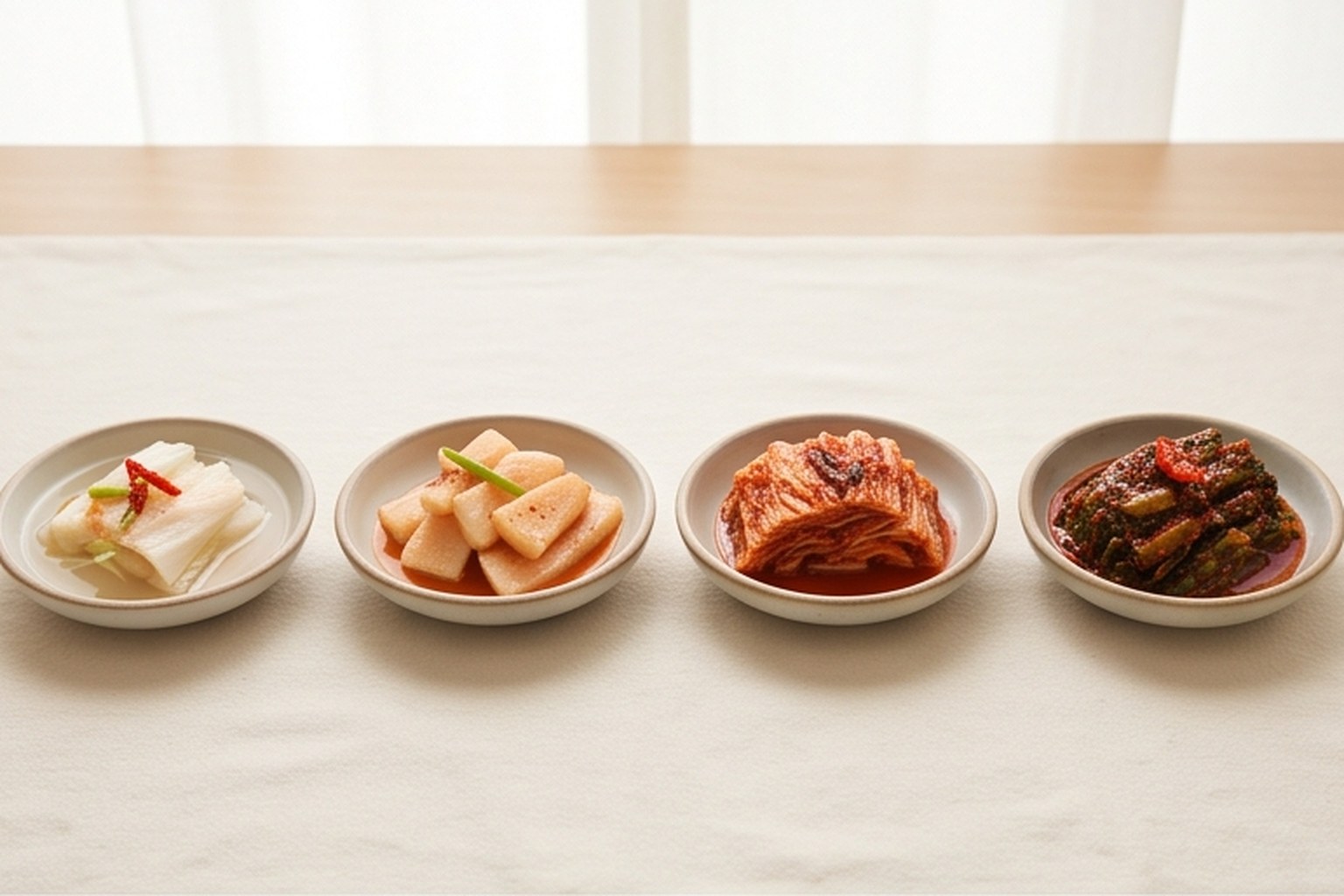
That is why northern-style water kimchi and dongchimi exist at all. In Jeolla, a barely-salted jar of radish floating in brine would have gone bad.
Salted seafood is the deciding ingredient
Jeotgal — fermented salted seafood — is what most people are actually tasting when they say a kimchi is "strong."
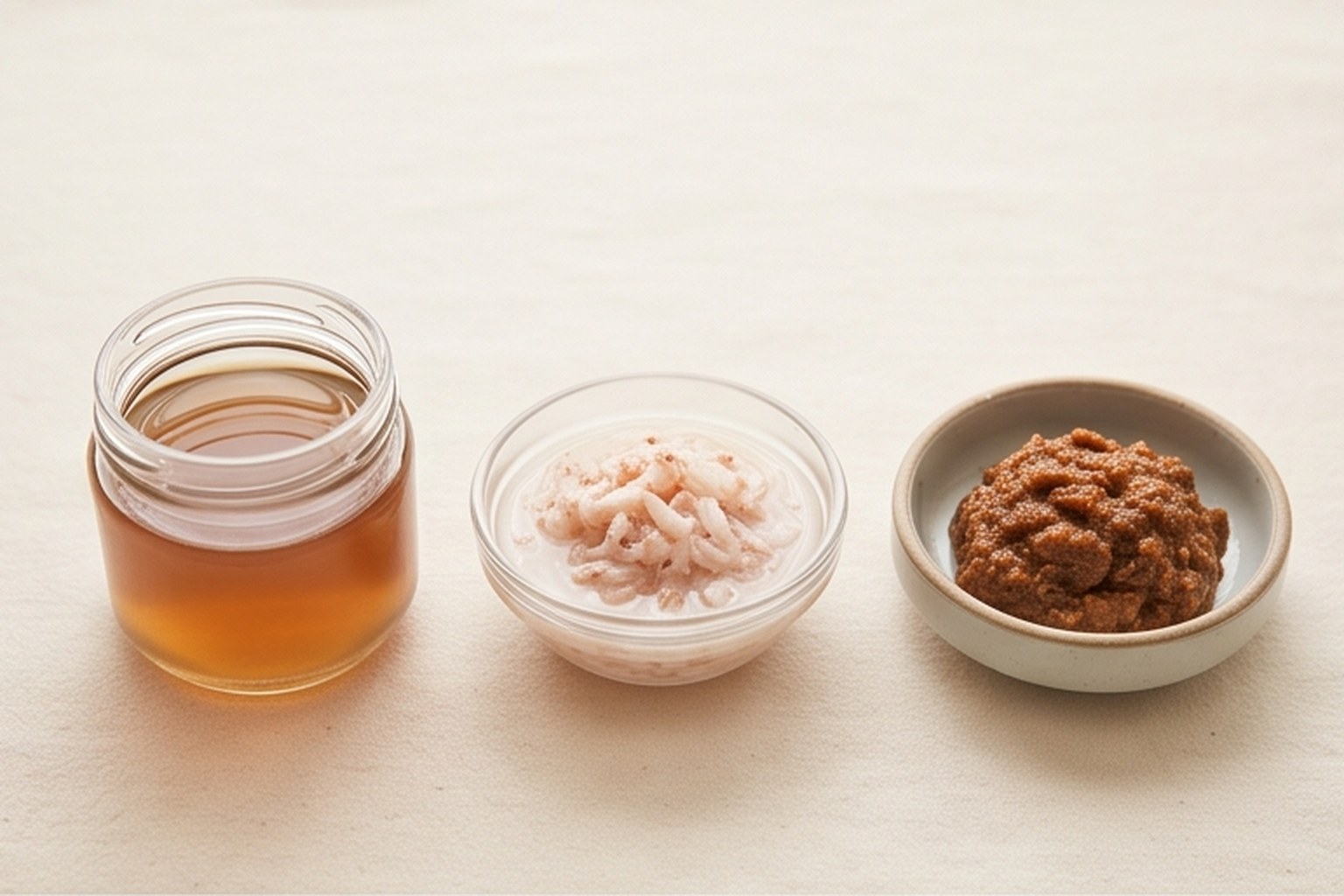
Southern kimchi uses it generously. Anchovy sauce is the common one, and Jeolla kimchi often adds salted shrimp, fermented croaker, or several at once. It gives that savory, almost cheesy depth that keeps building after you swallow.
Northern and central kimchi uses far less, and sometimes none. Seoul-style kimchi is often made with salted shrimp only, in small amount, which is why it reads as crisp and clean rather than deep.
If you are buying kimchi and want to predict the taste, read the ingredient list before the brand. Anchovy sauce high on the list means a southern profile.
Beyond cabbage
Regional identity also shows up in what gets pickled.
- Gangwon — the mountains, so less seafood. Squid or pollack sometimes stands in for fish sauce
- Jeju — island vegetables, and kimchi made with local greens rather than napa cabbage
- Chungcheong — moderate on every axis, which is exactly its reputation
- Gyeongsang — very salty, very hot, garlicky enough to be startling
- Jeolla — the most complex, with the widest ingredient list
What this means when you buy
Most kimchi sold abroad is mass-produced and lands in a middle register — moderately salty, moderately spicy, safe. It is a fine default and it is nobody's regional style.
If you find your kimchi bland, look for a brand that lists anchovy or shrimp sauce prominently, or a smaller producer. If it is too strong, the opposite: less jeotgal, more radish.
Vegan kimchi exists and is a real category, not a compromise, since northern styles were already light on seafood.
If you make it yourself
Do not chase a single authentic recipe, because there is not one. Decide which end of the spectrum you want first, then adjust salt, chili, and jeotgal together — they move as a group.
A useful starting point for a first batch is the middle: moderate salt, moderate chili, one tablespoon of anchovy sauce per head of cabbage. Taste after three days at room temperature and let that tell you which direction to push next time.
Cooking Korean food at home and not sure what to buy first? K-Pantry walks you through Korean ingredients one at a time — what they taste like, what to substitute, and what to skip until later.