Bibimbap is on nearly every Korean restaurant menu abroad. Then you see "Jeonju bibimbap" listed separately, usually a few dollars more. It is not a marketing label. Jeonju's version is a specific recipe from a specific city, and the differences are real.
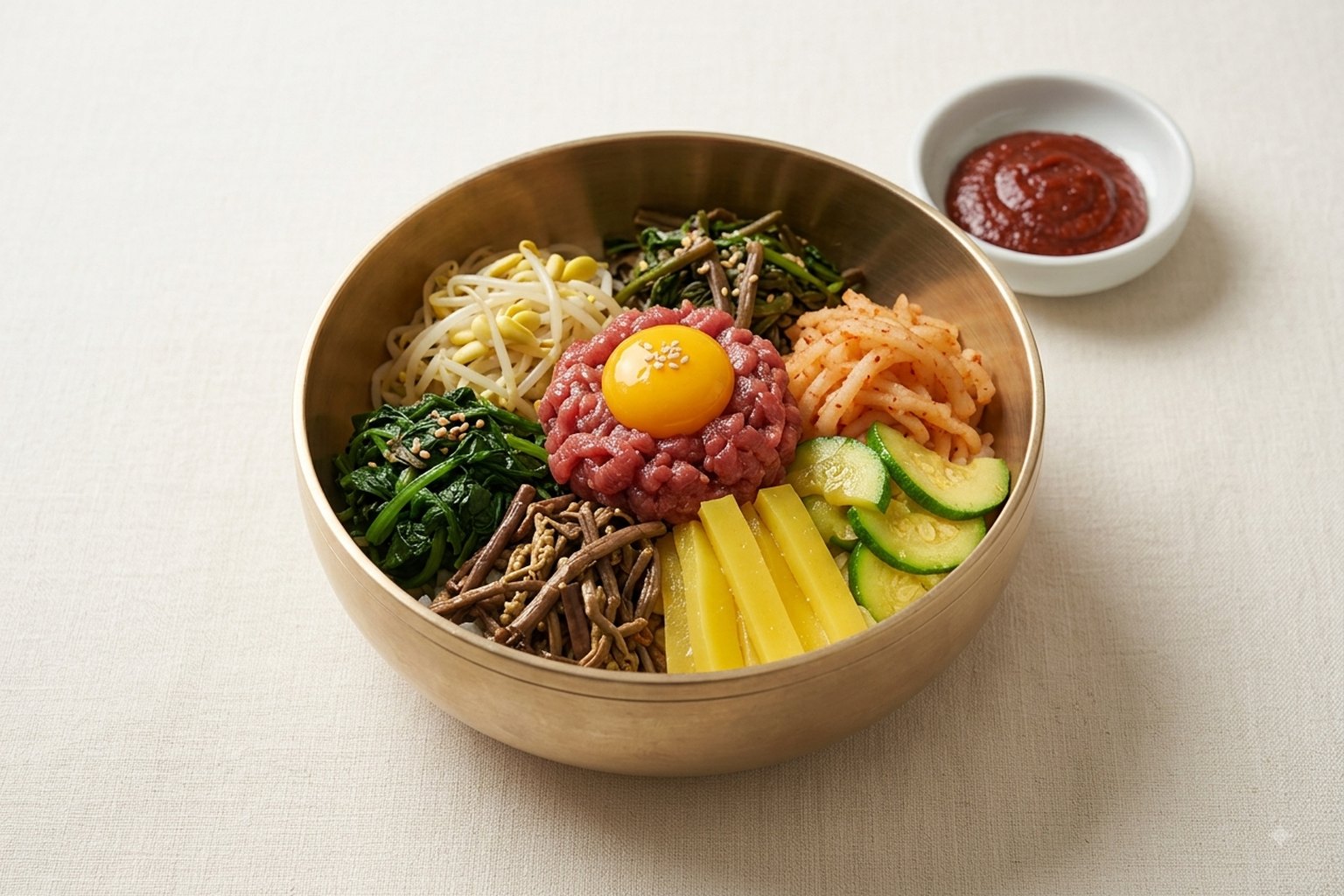
The short answer
| Regular bibimbap | Jeonju bibimbap | |
|---|---|---|
| Rice | Steamed in plain water | Cooked in beef broth |
| Beef | Ground or stir-fried, cooked | Often raw beef (yukhoe) |
| Signature topping | — | Hwangpomuk, a yellow jelly |
| Bean sprouts | Sometimes | Always, and they anchor the dish |
| Vessel | Bowl, or a sizzling stone pot | Traditionally a brass bowl, not sizzling |
| Side dishes | Two to four | Eight to twelve |
The rice is where it starts
This is the part most home cooks skip and the part that matters most. Jeonju bibimbap uses rice cooked in beef broth rather than water, sometimes with a spoonful of beef fat stirred in. The grains come out glossy and faintly savory before a single topping lands on them.
The effect is easy to underestimate. In a plain bibimbap, flavor comes from the gochujang and whatever you piled on top, and the rice is a neutral carrier. In Jeonju bibimbap the rice already tastes like something, so you need noticeably less gochujang to make the bowl work. The result is less sweet and less sharp.
The topping you won't find elsewhere
Hwangpomuk is a jelly made from mung bean starch, dyed pale yellow with gardenia fruit. It is cut into thin batons and laid across the top. On its own it tastes like almost nothing — the point is texture. It is slippery and cool and it breaks up the softness of everything else in the bowl.
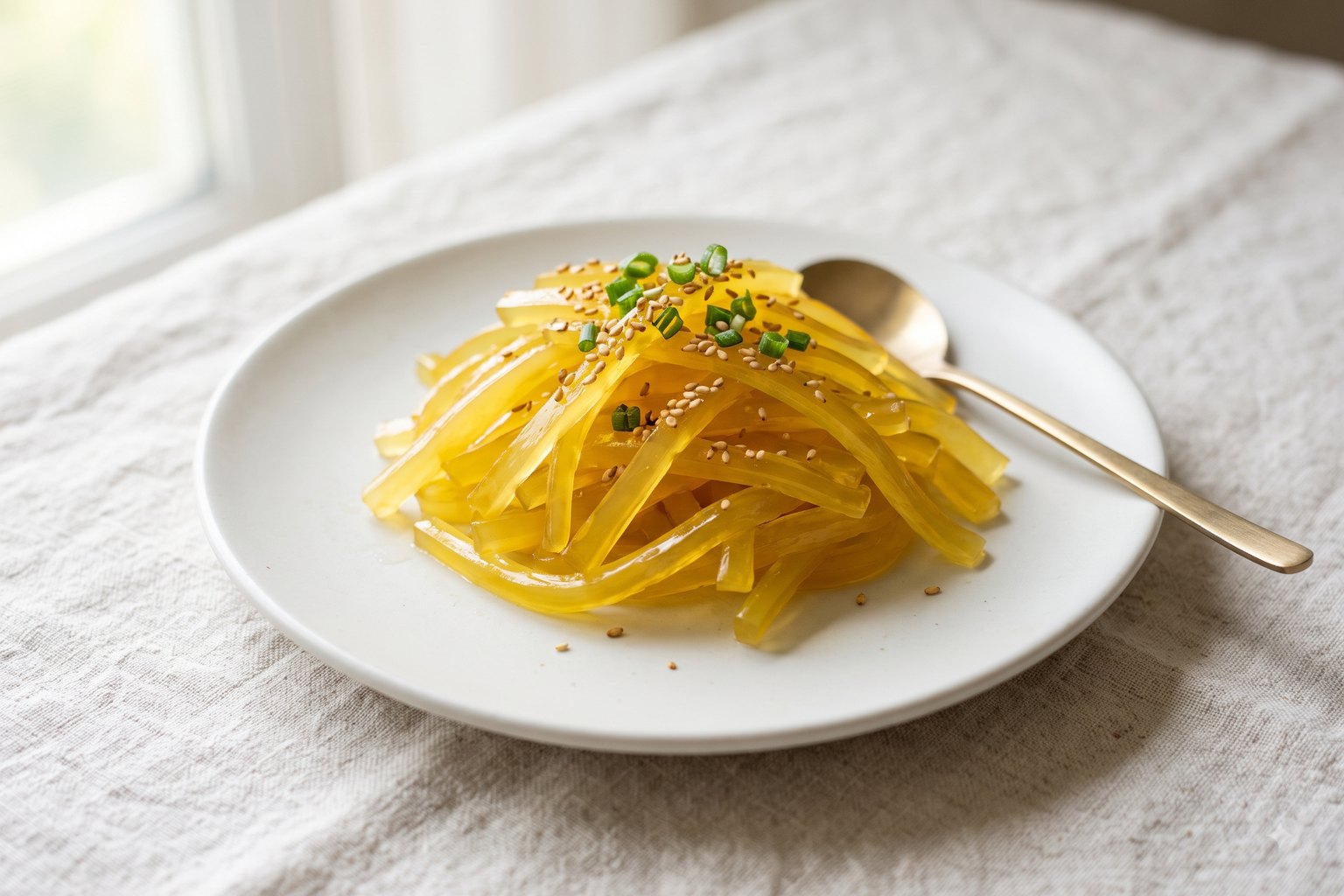
If you have only had bibimbap outside Korea, this is probably the ingredient you have never encountered. Very few restaurants abroad bother with it.
The raw beef is the other marker. Traditional Jeonju bibimbap uses yukhoe — beef sliced thin, seasoned with sesame oil and garlic, served raw, with a raw egg yolk on top. Many restaurants now offer a cooked version, and outside Korea the cooked version is the default for food safety reasons.
Why not a stone pot?
Dolsot bibimbap, the sizzling stone bowl, is the version most people picture. Jeonju's traditional form uses a brass bowl instead, served warm rather than screaming hot.
The logic is that a stone pot crisps the bottom layer of rice into a crust, which is delicious but flattens everything into one hot, toasted note. A brass bowl keeps the raw beef raw, the jelly cool, and the vegetables distinct. If the rice was cooked in broth, you want to taste it, not toast it.
Can you make it at home?
Partly, and the partial version is worth doing.
Cook your rice in beef broth instead of water, using the same liquid ratio you normally would. That alone gets you most of the way to the Jeonju flavor. Add soybean sprouts, blanched for exactly the time it takes to boil and drain — they should still snap.
Hwangpomuk is sold at large Korean groceries and is hard to substitute; nothing else has that texture. Skipping it is fine. For beef, brown thin-sliced sirloin quickly rather than using ground meat, and season it with sesame oil, soy sauce, and garlic off the heat.
What is not worth chasing is the side-dish spread. A Jeonju restaurant sends out a dozen small plates because that is the regional dining style, not because the bibimbap needs them.
What to order if you go
Ask whether the yukhoe version is available if you eat raw beef, and whether the rice is broth-cooked — a restaurant doing it properly will say yes without hesitation. If the answer is vague, you are being served a good bowl of ordinary bibimbap under a regional name, which is common even inside Korea.
Cooking Korean food at home and not sure what to buy first? K-Pantry walks you through Korean ingredients one at a time — what they taste like, what to substitute, and what to skip until later.