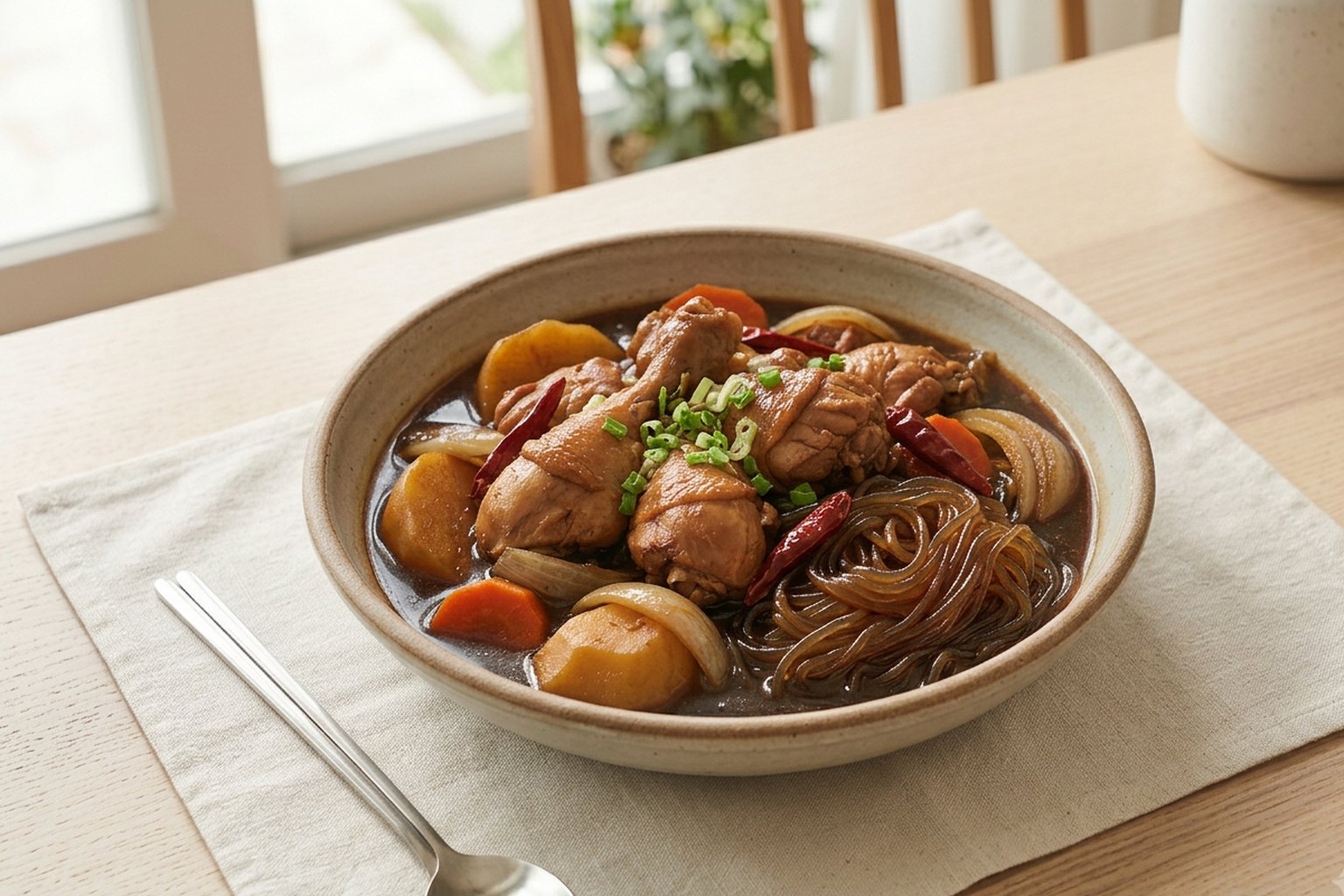
Most Korean braised chicken is red. Dakbokkeumtang is red. Buldak is aggressively red. Then Andong jjimdak arrives dark brown and glossy, tasting sweet and savory before any heat shows up. If you expected spicy chicken, the first bite is confusing.
The dish is not a milder version of anything. It is built on a different base.
Jjimdak is not a milder dakbokkeumtang
| Dakbokkeumtang | Andong jjimdak | |
|---|---|---|
| Sauce base | Gochujang and gochugaru | Soy sauce and sugar |
| Color | Red-orange | Dark brown |
| Heat source | Chili paste, throughout | Whole dried chilies, on the side |
| Texture of sauce | Thick, clinging | Thin, pooling |
| Noodles | Rarely | Glass noodles, essential |
| First impression | Hot | Sweet |
The two dishes share a cooking method — chicken braised with potato and carrot until the meat falls apart — and almost nothing else. Swapping the sauce does not turn one into the other, because the chili paste in dakbokkeumtang also thickens it. Take that out and you need a completely different plan for the liquid.
What the sauce actually is
The base is soy sauce, sugar, garlic, and water, in roughly that order of importance. Some cooks use dark brown sugar, some use a spoonful of oligodang syrup for gloss. Onion goes in early and dissolves, which adds sweetness people often mistake for extra sugar.
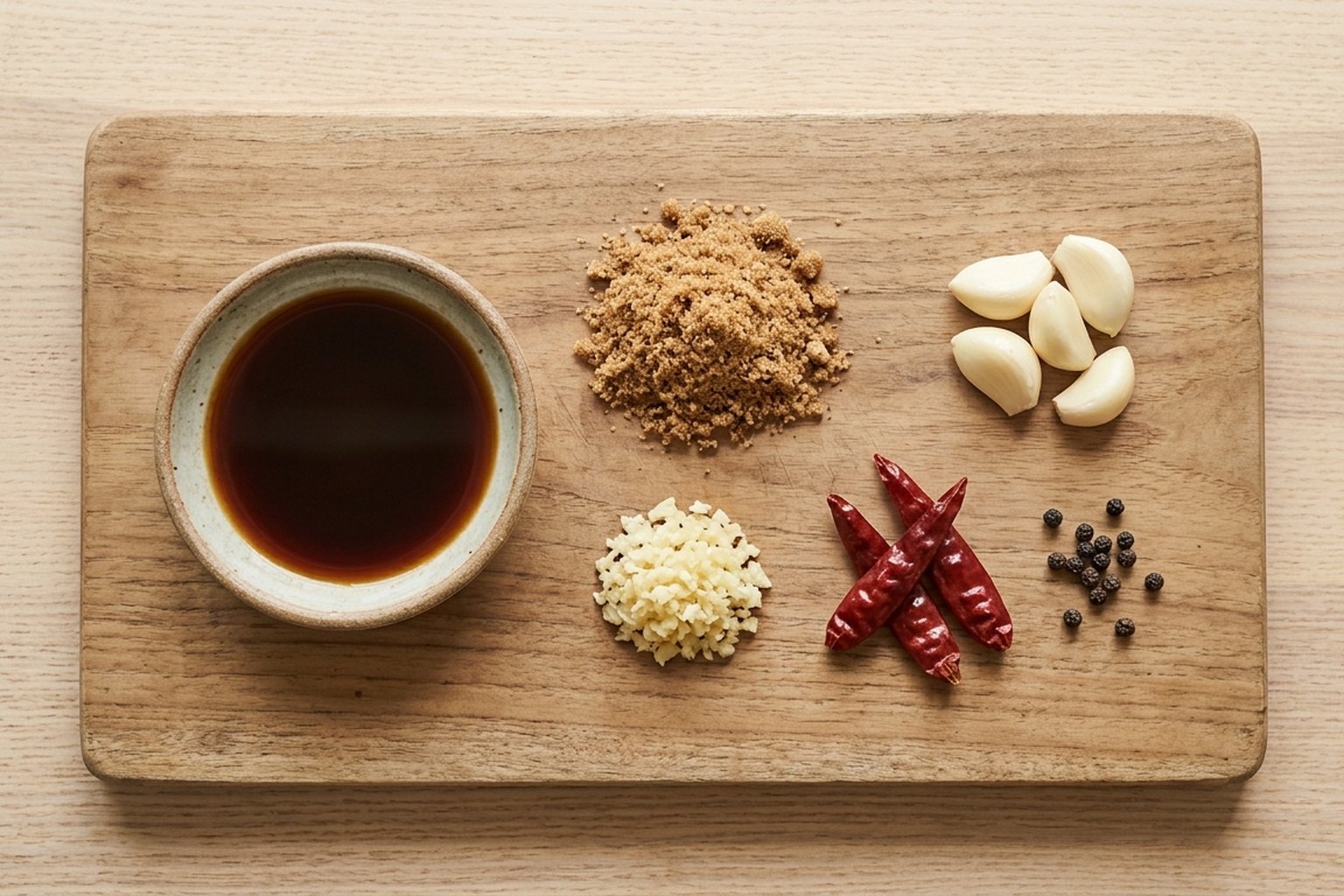
Heat comes from whole dried red chilies dropped in near the end. Because they are whole rather than ground, they release aroma and a slow background warmth instead of the frontal burn of gochugaru. You can pull them out. You cannot pull chili paste out.
This is why heat level in jjimdak is a dial rather than a fixed property. Restaurants in Andong will ask how hot you want it and adjust by counting chilies.
The glass noodles are not a garnish
Dangmyeon — sweet potato starch noodles — go in at the end and soak up the thin sauce. They are the reason the sauce is thin in the first place.
If you thickened jjimdak sauce like a stew, the noodles would sit in it rather than absorb it. The dish is engineered so that by the time you reach the bottom of the pan, the noodles have taken up most of the liquid and turned dark and slippery. Many people eat jjimdak primarily for that layer.
Add them too early and they dissolve. Add them raw with too little liquid left and they stay chalky. Soaking them in cold water for about thirty minutes beforehand, then adding them in the last five minutes of cooking, avoids both problems.
Where the dish came from
The commonly repeated story is that jjimdak was created in Andong's old market in the 1980s, when chicken vendors combined orders and adapted to what customers asked for. Whether that origin is exact is debated, and there are claims of an older banquet dish behind it. What is not debated is that the modern nationwide version spread from Andong Market in the 1990s.
That matters practically: jjimdak is a fairly recent dish, which is why the recipe is loose. There is no single authoritative ratio.
A home version that works
Cut a whole chicken into pieces, or use thighs. Boil briefly and drain to clear the scum — this keeps the sauce clean-tasting.
For the sauce, start with soy sauce, water, and sugar at a rough ratio of two parts soy to four parts water to one part sugar, plus a generous amount of minced garlic. Braise the chicken with potato and carrot for around twenty-five minutes, add onion and green chili, then the soaked glass noodles for the last five.
Taste before you add more sugar. Onion and carrot both sweeten the pot as they cook, and jjimdak that is too sweet has no way back.
Cooking Korean food at home and not sure what to buy first? K-Pantry walks you through Korean ingredients one at a time — what they taste like, what to substitute, and what to skip until later.